Energy abundance for the betterment of humanity.
Most of the oil is still in the ground. We bring it up.
Every well leaves the majority of its oil behind. Spiritus recovers it — turning fields you've already drilled into your next decade of production. The biggest oil opportunity in America isn't waiting to be discovered. It's the barrels we've already found.
Why it Matters
60% of oil left underground
-40% CO₂ supply collapse
U.S. EOR CO₂ supply has fallen since 2017.
+19% rising oil demand
We make CO₂ on site — and put it down the well.
01.
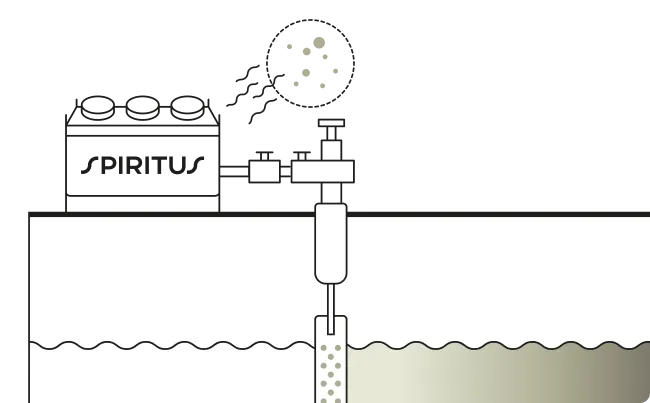
Capture from the air, on site
Our system pulls CO₂ directly from the atmosphere right at the field — independent of natural domes, industrial emitters, and pipelines. It’s a CO₂ supply you control, produced where your wells are.
Discover Our Technology
02.
Inject into the reservoir
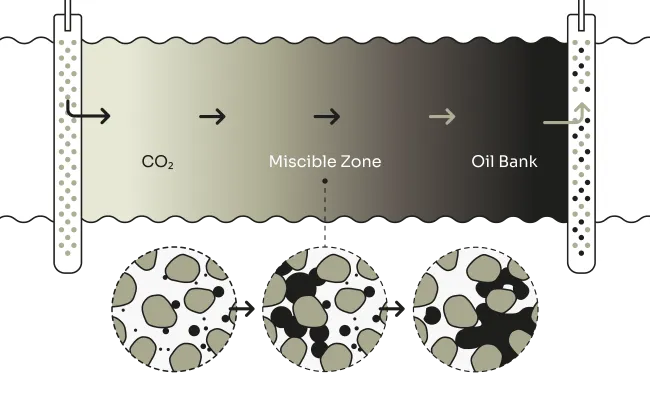
Up to 60% of your original oil is still in the ground. Miscible CO₂ flooding mobilizes it . The CO₂ becomes miscible with the trapped oil, expanding it and reducing its viscosity so it flows toward the producing well.
03.
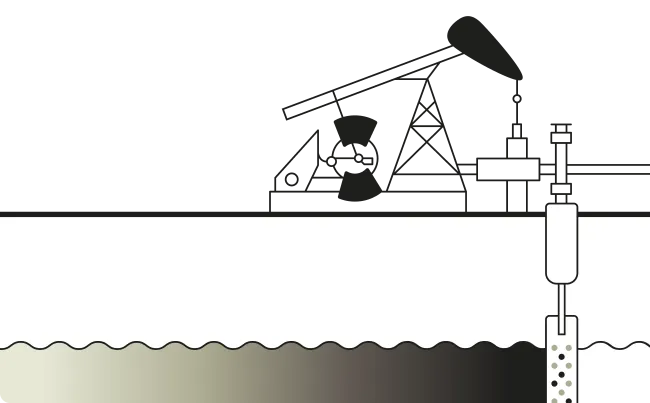
Recover the oil left behind
Production rises from reserves that were already discovered --
extending the life of the field and the value of the asset (up to
2x a field's producing life).
Bring mature fields back to life — with minimal capital at risk.
A new way to unlock the reserves you already own. We finance, build, and operate the capture. You pay for delivered CO₂ and share the upside on incremental barrels — putting minimal capital at risk. We’re proven, not experimental. A proprietary capture core paired with field-proven, Tier-1 oilfield equipment — de-risked at our operating pilots.
How the partnership works.
01
Field assessment
We evaluate your reservoir's CO₂-EOR potential and model the production uplift.
02
On-site capture
We finance, build, and operate direct air capture right at your site.
03
Inject & recover
CO₂ floods the reservoir, mobilizes trapped oil, and production rises.
04


We make the CO₂ on site, from the air, so you're never exposed to pipeline access, dome depletion, permitting fights, or third-party supply. The molecule is produced where your wells are — a supply you effectively control.
What does it cost us upfront?
Very little. Spiritus finances, builds, and operates the capture, so you carry minimal upfront capital. You pay for the CO₂ and share the upside on incremental production — the bulk of the capital risk sits with us.
What kind of fields are a good fit?
Mature or declining oil fields suited to miscible CO₂ flooding — where a meaningful share of the original oil remains in place. Our first step is a reservoir assessment to confirm the fit and model the uplift.
Is the technology proven?
The capture science is de-risked at our operating pilots, and the surrounding system is built from field-proven, Tier-1 oilfield equipment. CO₂-EOR itself is a decades-old, well-understood recovery method — what's new is making the CO₂ on site.
How do we get started?
Request a basic assessment. We'll evaluate your field's potential and outline what a partnership could look like — with no obligation.
From first wells to national scale.

Today: Proven at pilot
On-site CO₂ in the Permian and Rockies — turning declining fields into producing assets, one basin at a time.
The Future: Carbon-to-oil at scale
The next 70 billion barrels are American — and the lowest-carbon in the world.
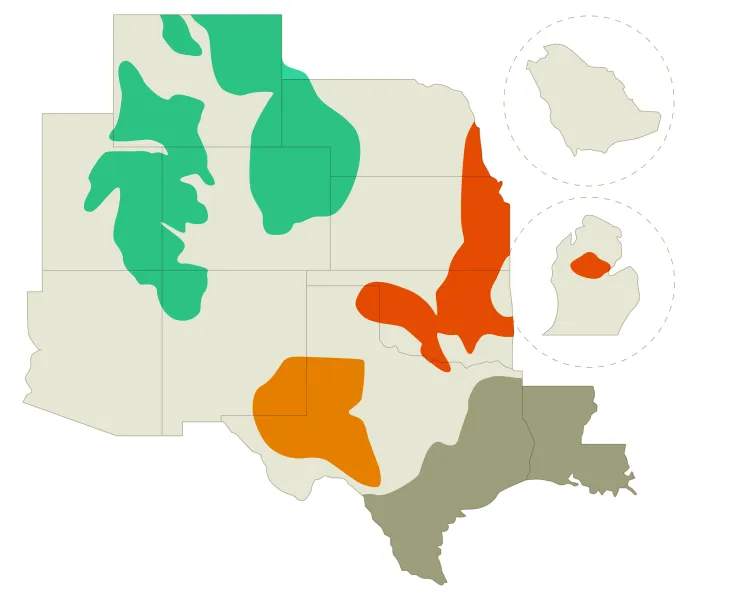
Permian Basin
TX & NM
Rocky Mountains
WY & Region
Bakken / Williston
ND & MT
Mid-Continent
TX Panhandle & Region
Gulf Coast
TX-LA Salt Basin
Marcellus
Appalachia
Michigan Basin
Lower MI
International
In Exploration
Partner with Spiritus
For Operators
Explore a Partnership
Find out what on-site CO₂-EOR could do for your field — production uplift, minimal upfront capital, shared upside. Start with a basin assessment.
For Investors & Partner
Back the Build-Out
We're building the lowest-cost source of CO₂ — and a new asset class of low-carbon American oil. We'd welcome a conversation.
Find out what on-site CO₂ enhanced oil recovery could do for your field.